Airport Expansion
Avelo Closed Three Bases This Year. McKinney Is the One It's Opening.
The most useful thing to know about Avelo's McKinney launch happened five months before it was announced: the airline cut itself down to five core bases, and McKinney is the only new one.
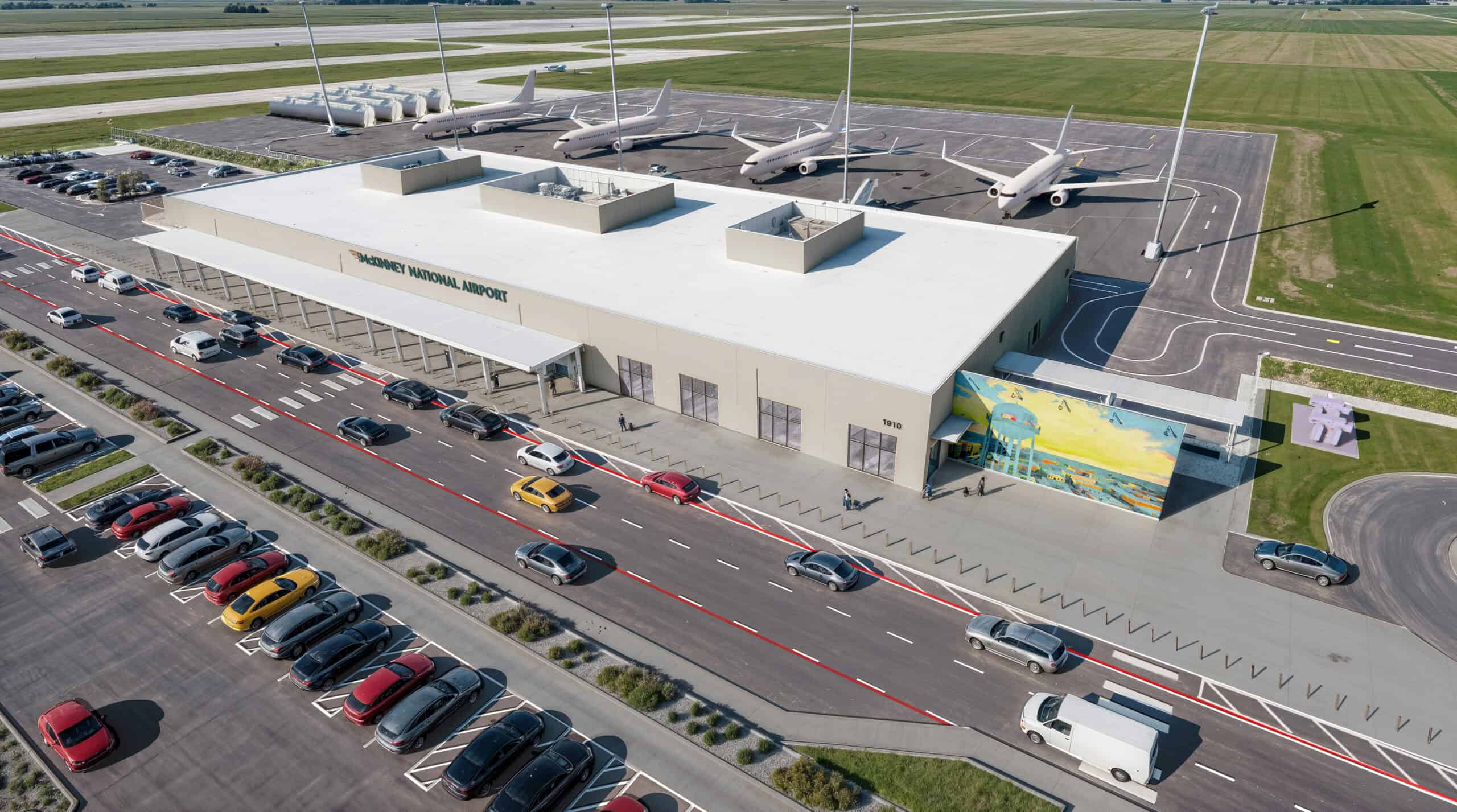
If you are weighing a November flight out of McKinney National Airport, the most useful thing to know about Avelo Airlines isn't in the June 30 route announcement. It's in a press release from January.
On January 6, 2026, Avelo said it would close three bases — Phoenix-Mesa Gateway in Arizona, Raleigh-Durham in North Carolina, and Wilmington in North Carolina — and pull six Boeing 737-700s from its fleet, taking it from 22 aircraft to 16. Service at the closed bases contracted sharply. Aviation Week reported that Raleigh-Durham dropped from seven routes to two, and Wilmington from eleven destinations to four.
That is the context most local coverage left out. And it cuts the other way too, which is why it's worth understanding rather than avoiding.
The same announcement named the bases Avelo intends to keep and grow: New Haven, Philadelphia/Delaware Valley, Charlotte/Concord, Central Florida/Lakeland — and Dallas/McKinney, which it said it would open in late 2026. Of those five, McKinney is the only one that didn't already exist. An airline that had just decided to stop doing a great many things chose to start doing this one.
Avelo tied the retrenchment to a recapitalization, saying its cash position is now "one of the strongest in the U.S. airline industry relative to its size." The airline has not disclosed how much it raised, and we would treat any specific figure you see as unconfirmed. What is on the record is the strategic shape: fewer bases, a single aircraft type, and capital concentrated behind them.
The scale of the pullback is easier to see in the schedule than in the press release. A May 2026 Simple Flying analysis comparing Avelo's summer schedules year over year counted roughly 50 routes shed and more than 3,000 flights removed in the quarter, a 29 percent year-over-year cut. Those numbers come from that publication's own schedule comparison rather than from Avelo or a data provider like Cirium, so treat them as a directional estimate rather than an official figure.
There is a real risk worth naming. That same analysis found about 60 percent of Avelo flights now touch its New Haven base — a concentrated network, and concentration is fragile. McKinney is part of the answer to that problem, not exempt from it. An airline that trimmed hard once can trim again, and a two-aircraft base is a smaller commitment than a terminal is.
What makes DTX different from a route that gets cut quietly is that it is a base, not a spur. Avelo is putting two 737-800s, crews, and more than 100 local jobs here, alongside a $79 million municipal terminal built for this purpose. Bases are expensive to open and expensive to unwind; that asymmetry is the strongest available signal that the November service is meant to last.
Longer term, Avelo has ordered 50 Embraer E195-E2s with purchase rights for 50 more, and expects to be the first U.S. operator of the type in 2028. No E2s have been assigned to McKinney, and it would be speculation to say any will be. But a brand-new base is exactly the kind of place a fleet transition eventually shows up, and it's worth watching.
None of this changes the November schedule. It does mean the honest answer to "will these flights actually happen" is better than a shrug: Avelo spent the first half of 2026 deciding what it wanted to be, and McKinney was on the short list.
Sources
Related content
News
Airlines
Stay in the loop
Get notified about route announcements, airport updates, and deal alerts.